
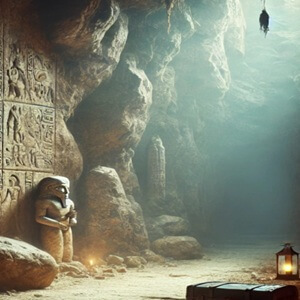
In April of 1909, as the Colorado River cut its endless path through the Grand Canyon, a man named G.E. Kincaid drifted quietly along its shadowed walls in a small wooden boat. He was no tourist. He moved with purpose, scanning the cliffs as if he knew they were watching him back.
Kincaid claimed he was an explorer sent west on a private expedition, funded by the Smithsonian Institution. For weeks he traveled alone through one of the most inaccessible stretches of the canyon, where sheer rock faces rose thousands of feet and sunlight barely reached the river below.
Then, one afternoon, something caught his eye.
High above the river, roughly 2,000 feet up the canyon wall, he spotted what looked like a dark opening unnatural in its symmetry. It wasn’t a shallow cave. It was a tunnel, carved straight into the rock.
With ropes, iron spikes, and no small amount of nerve, Kincaid climbed.
Inside, the air was dry and still. His lantern light revealed smooth passageways branching off in every direction, forming what he described as a vast underground complex. The walls bore marks that looked intentional cut, shaped, and polished by hands long gone.
As he ventured deeper, the tunnels opened into chambers.
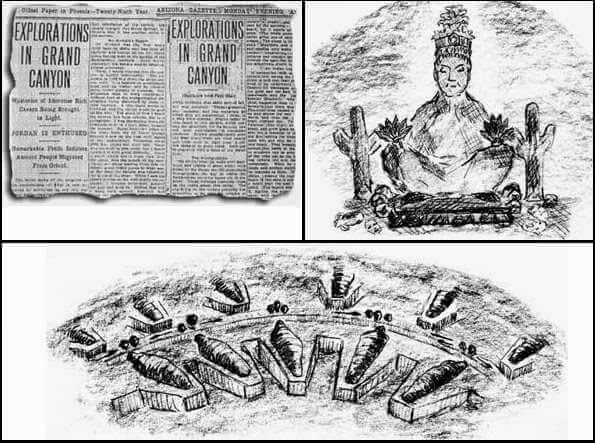
There, according to Kincaid, were stone tables, copper weapons, and tools unlike anything known to Native American cultures. In alcoves along the walls, he found human remains bodies wrapped in dark cloth, laid carefully into niches. Some were naturally preserved by the dry air, their faces frozen in time.
Most unsettling were the symbols.
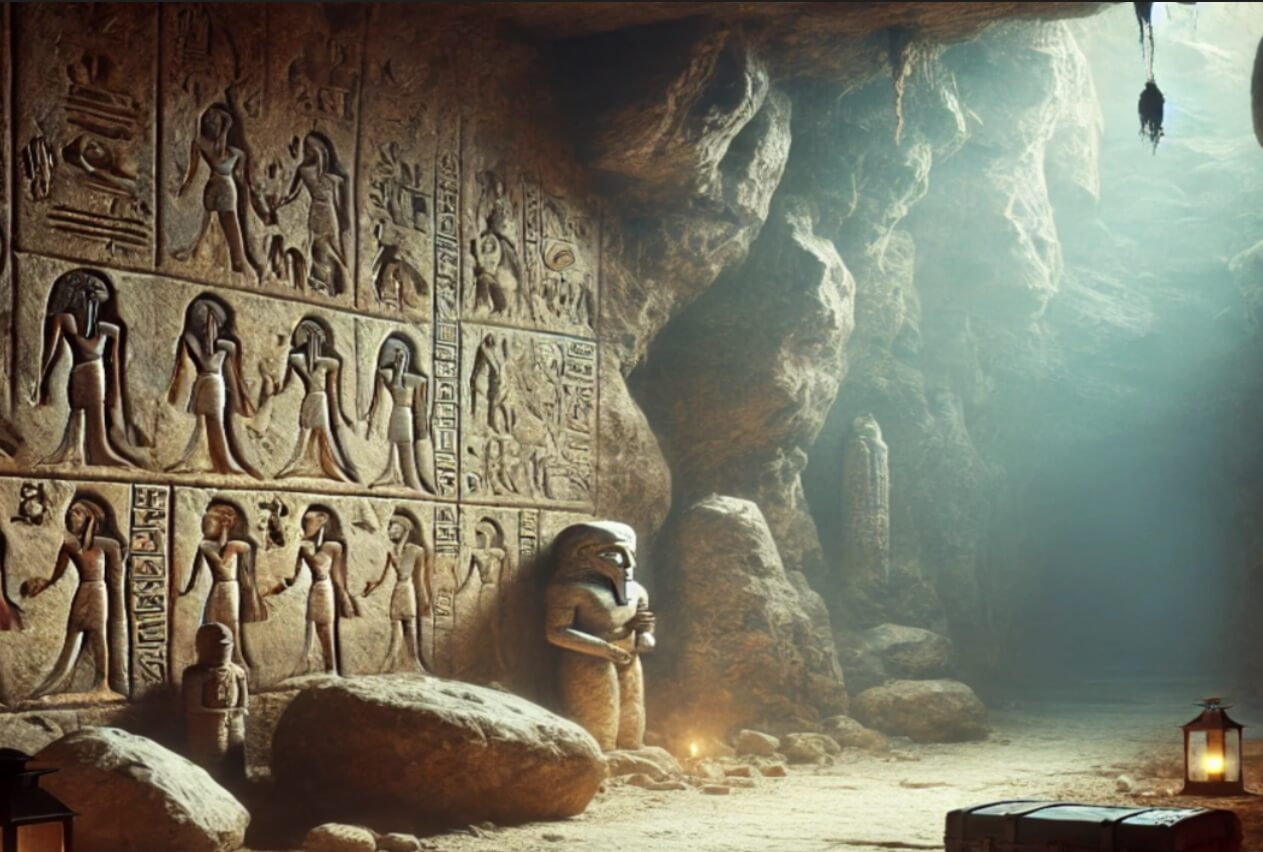
Carved into stone tablets and walls were strange characters hieroglyph-like markings that reminded Kincaid of Egyptian writing. One chamber held what he described as a statue of a seated figure, arms crossed, resembling depictions of Eastern gods. Another contained storage rooms filled with unknown artifacts, all organized as if the inhabitants had simply… left.
Kincaid believed this place was ancient. Far older than anything recorded in North America.
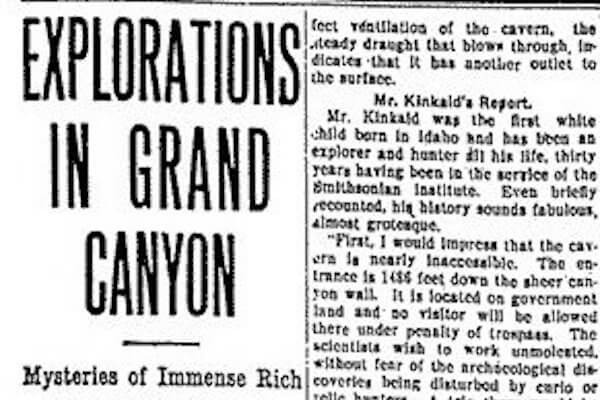
He returned to civilization shaken, carrying sketches and notes. Soon after, the story broke in the Arizona Gazette on April 5, 1909. The article claimed the Smithsonian had dispatched a Professor S.A. Jordan to investigate further, hinting that the discovery could rewrite human history suggesting an Old World civilization, possibly Egyptian, had once settled deep within the Grand Canyon.
Then silence.
No follow-up articles.
No official reports.
No photographs.
No artifacts displayed.
No records of Kincaid.
No Professor Jordan.
And the Smithsonian denied everything.
The canyon swallowed the story whole.
Over time, skeptics dismissed it as sensational journalism, the kind that sold papers in the early 1900s. Others believed something else happened that the discovery was real, but too disruptive to be acknowledged. The fact that many caves in the canyon are now restricted, and that some canyon landmarks carry Egyptian-sounding names, only fueled the mystery.
Today, the tunnels Kincaid described have never been found.
Or at least, never acknowledged.
Whether it was an elaborate hoax, a misunderstood discovery, or something deliberately buried by time and bureaucracy, the Kincaid–Jordan story lingers like an echo in the canyon faint, unsettling, and impossible to fully dismiss.
Because the Grand Canyon is vast.
And some places, once entered, do not easily give up their secrets.

Charles R
Sure seems like a highly unlikely claim to the point of being ridiculous.
Matthew W
Ridiculous, now there is a word sore eyes on this wonderful website.
Donald P
There were lots of hoaxes at this period of time to sell newspapers. PT Barnum was at the height of his popularity.