

A Teacher in the Wilds of Canada
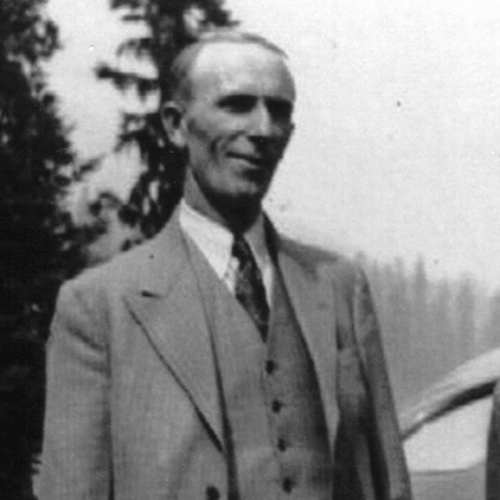
In the early 1900s, John W. Burns worked as a schoolteacher in the rugged frontier town of Agassiz, nestled in the Fraser Valley near the towering forests of British Columbia.
Burns wasn’t a cryptozoologist or explorer. He was simply a curious listener.
While living there, he became acquainted with members of the Sts’ailes (then often called the Chehalis). Around campfires and in everyday conversations, Burns repeatedly heard stories of a strange creature that lived deep in the mountains.
The locals called it “Sasq’ets” a word from their language describing a wild, hairy giant of the forest.
That word would later evolve into something famous: Sasquatch.

Stories of the “Wild Man”
Burns collected several accounts from Indigenous witnesses who claimed to have encountered the creature.
One particularly dramatic story involved a woman gathering berries who suddenly noticed a massive figure nearby. According to the account, the creature stood upright like a human but was covered in dark hair. It reportedly watched her silently before disappearing back into the forest.
Other stories described similar traits:
-
Standing 7 to 8 feet tall
-
Covered in thick hair
-
Walking upright like a person
-
Emitting a strong odor
-
Living in remote mountain areas
To the communities sharing these stories, the creature wasn’t just folklore. It was considered a real but elusive inhabitant of the wilderness.
Bringing Sasquatch to the World

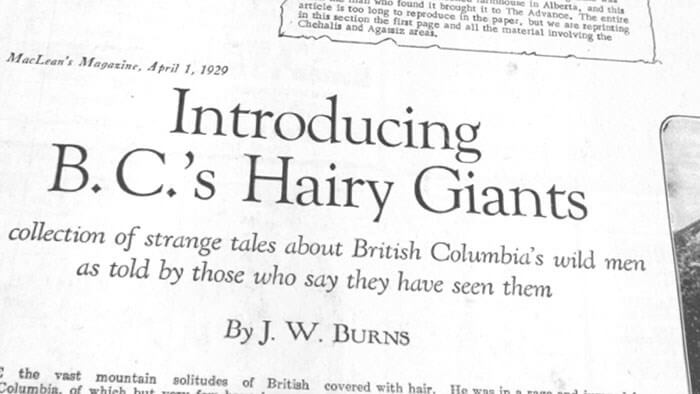
In 1929, Burns published an article titled “Introducing B.C.’s Hairy Giants” in the magazine Maclean’s.
In the article, he summarized the accounts he had gathered and introduced the word Sasquatch to English readers for the first time.
Rather than claiming he had seen the creature himself, Burns presented the stories as testimony from Indigenous witnesses. His tone was curious and respectful, though many readers at the time treated the story as entertainment.
Still, something important had happened: the legend had left the forest and entered the public imagination.
From Sasquatch to Bigfoot
Decades later, in 1958, large mysterious footprints were discovered at a logging site in Humboldt County.
A local newspaper published the story, and the creature responsible was nicknamed “Bigfoot.”
That single headline transformed the legend. Soon, sightings spread across North America, and the creature became a global mystery.
The modern Bigfoot legend is now built from several threads:
-
Indigenous stories about Sasquatch
-
Early documentation by people like John W. Burns
-
Footprint discoveries and modern sightings
Did Burns Believe?
Interestingly, Burns himself remained cautious.
He admitted he had never personally seen a Sasquatch. But after hearing so many consistent stories from different witnesses, he believed something unusual might be living in the wilderness.
Whether that “something” was an undiscovered primate, a misidentified animal, or simply a powerful cultural legend remained an open question.
The Legacy of J.W. Burns
Today, Bigfoot is everywhere from documentaries to podcasts to movies. But many people don’t realize the modern story traces back to a schoolteacher patiently listening to stories in a small Canadian community.
Without John W. Burns writing down those accounts nearly a century ago, the word Sasquatch might never have become part of global folklore.
Sometimes legends begin not with a discovery but with someone willing to listen.