
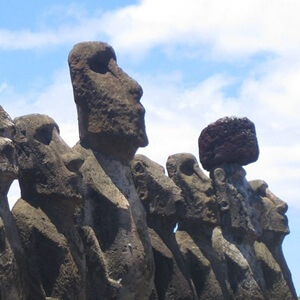
For centuries, the towering stone figures of Easter Island have stared silently across the landscape, guarding their secrets. Now, new research suggests these mysterious monuments may have had a far more practical and ingenious purpose than previously believed.
A small land mass of only 63 square miles, Easter Island has remained something of an enigma for years.
Its army of strange stone heads (known as Moai) and the long-debated collapse of its ancient society remain some of the world’s most enduring archaeological mysteries.
Recently, in an effort to learn more about the statues and their creators, a team of archaeologists and soil scientists conducted an analysis of soil samples collected from the base of statues standing upright in the Rano Raraku quarry on the eastern part of the island.
Up until now, it was believed that the completed statues at the quarry had simply been awaiting transport to other parts of the island, but as it turns out, the soil holds clues suggesting that perhaps these particular statues had been left there on purpose.

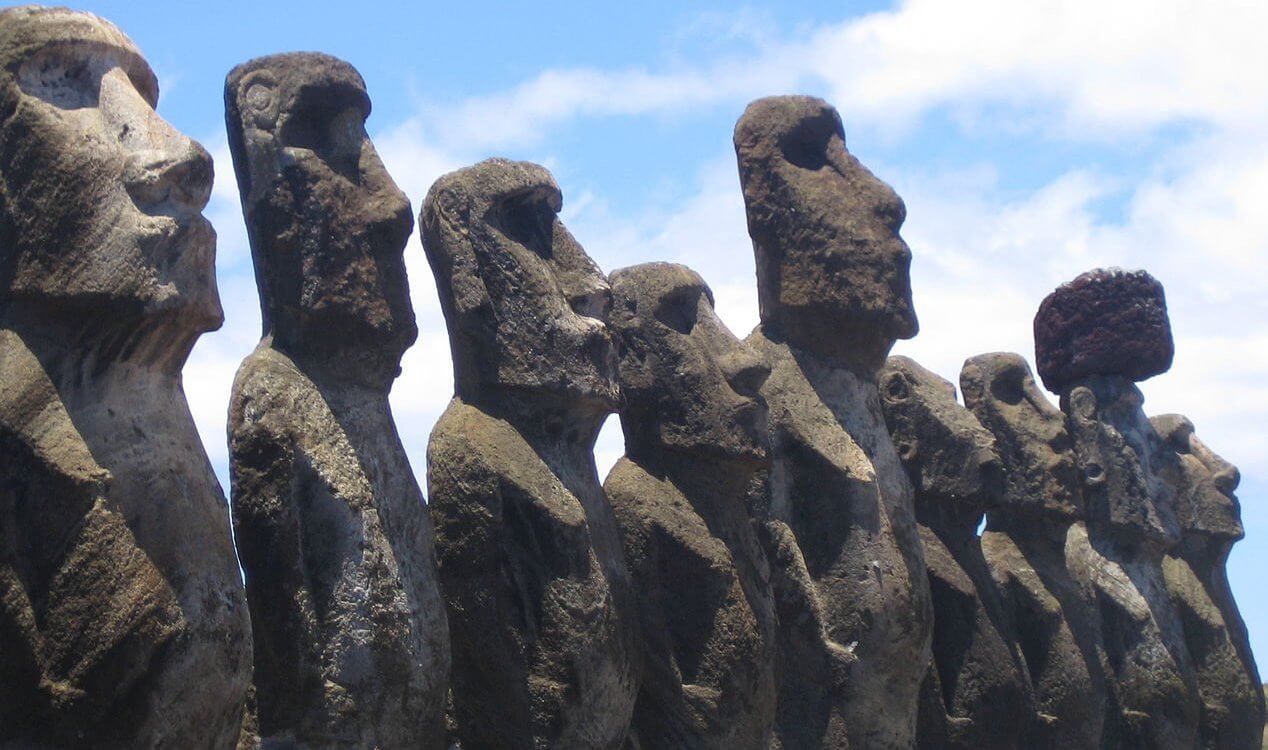
The samples showed evidence of food crops, indicating that not only had the soil been more fertile at this location than expected, but that the quarry itself may have been used to grow crops.
The statues at the quarry, the researchers believe, may have been a tribute to the soil’s fertility.
“These and probably other upright Moai in Rano Raraku were retained in place to ensure the sacred nature of the quarry itself,” said study co-author Jo Ann Van Tilburg of the University of California.
“The Moai were central to the idea of fertility, and in Rapanui belief their presence here stimulated agricultural food production.”