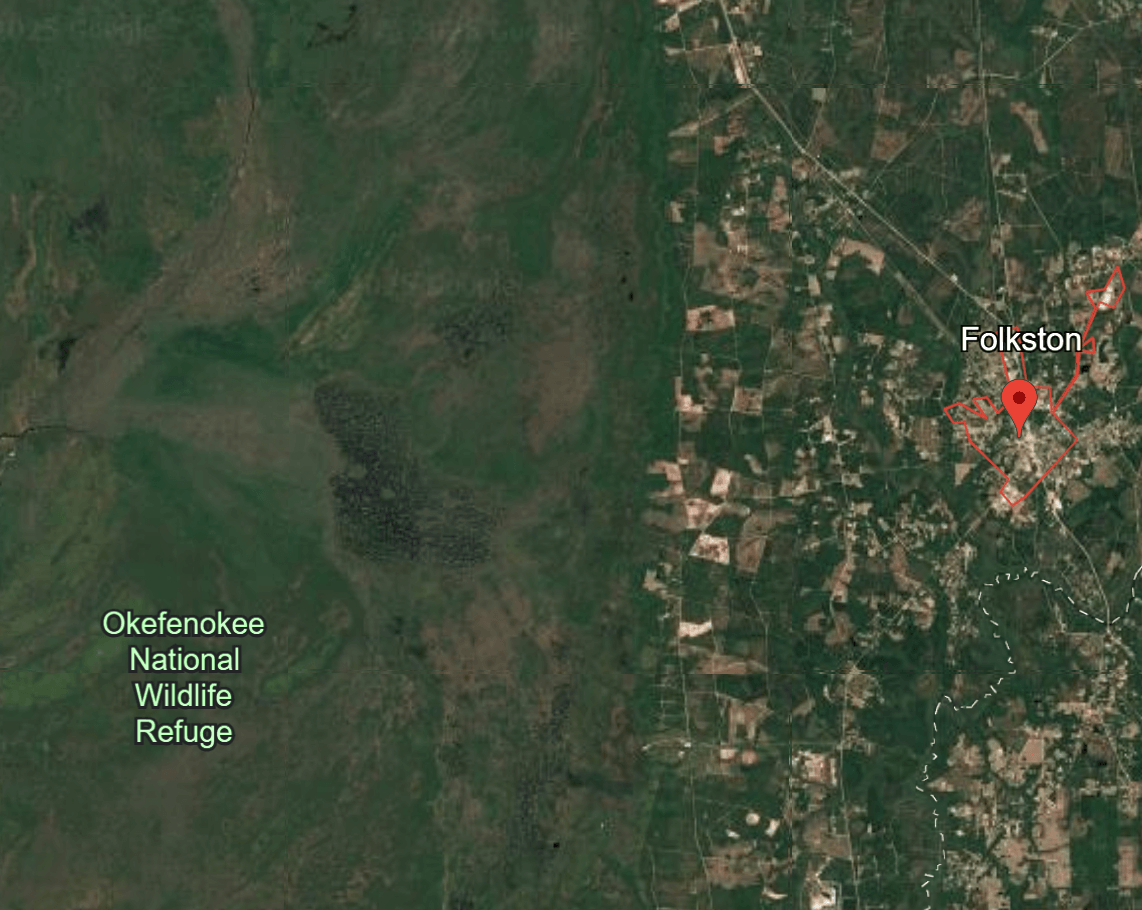
A listener writes “Early this morning (Friday, November 21), my husband and I were at our deer camp in southeastern Georgia, not far from Folkston. Around 4:30 a.m., I stepped outside to my truck when I heard a long, drawn-out howl in the distance.
At first I assumed it was a dog, but I stopped and listened something about it sounded different. It was longer, deeper, and unlike anything I’m used to hearing out there. I pulled out my phone and recorded several clips. The clearest one came from the north, which I’m attaching. Another call, much farther off to the south, sounded very similar, but that recording didn’t turn out well because it was more distant and the nearby dogs had started barking.
Also, just last month, CSX Railroad supposedly captured two images of a Sasquatch crossing the tracks near Folkston, about 25 minutes south of here.”
Take a listen, what do you think?
Listen: Howl From Georgia

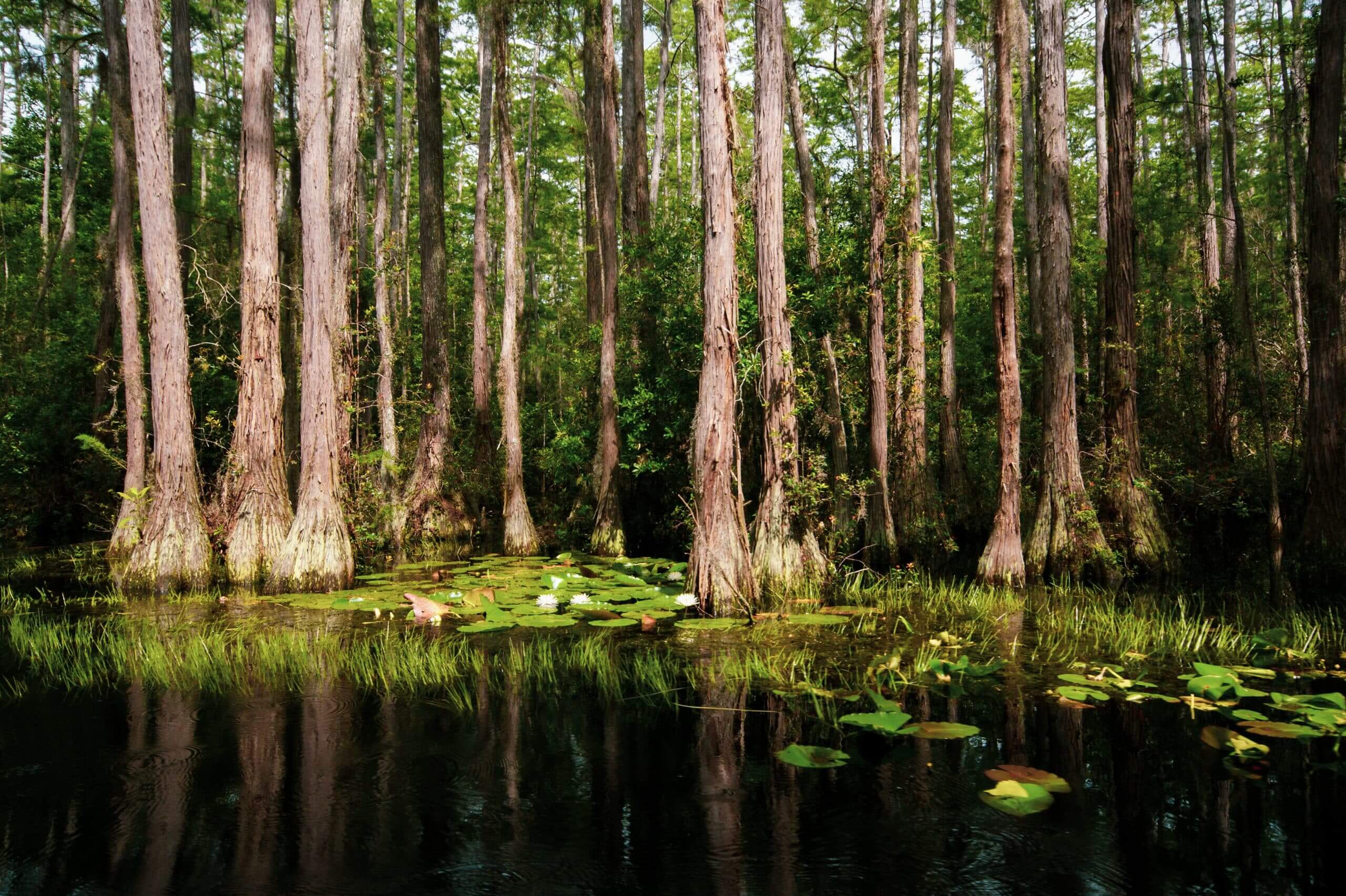
Not far from where this recording was made lies the Okefenokee National Wildlife Refuge, one of the largest and most untouched wild areas in the southeastern United States. Stretching across southern Georgia and into northern Florida, the refuge protects much of the Okefenokee Swamp—a vast, peat-filled wetland often called the “land of trembling earth.”

The area has long been associated with reports of Sasquatch, or as many locals call it, the Skunk Ape. One of the earliest documented encounters dates back to 1829, describing a so-called “wild man” in the Okefenokee Swamp who reportedly attacked a group of hunters.
Key Features of the Okefenokee
Size: Approximately 680 square miles (over 400,000 acres)
Landscape: A mix of open prairies, blackwater channels, cypress forests, pine uplands, and floating peat mats
Origin: Formed over thousands of years as peat accumulated within a shallow sandstone basin